
ICC to begin landmark trial into crimes against humanity in Libya’s detention system

Updated: Jul 28
A breakthrough for survivors which must open the way to wider accountability

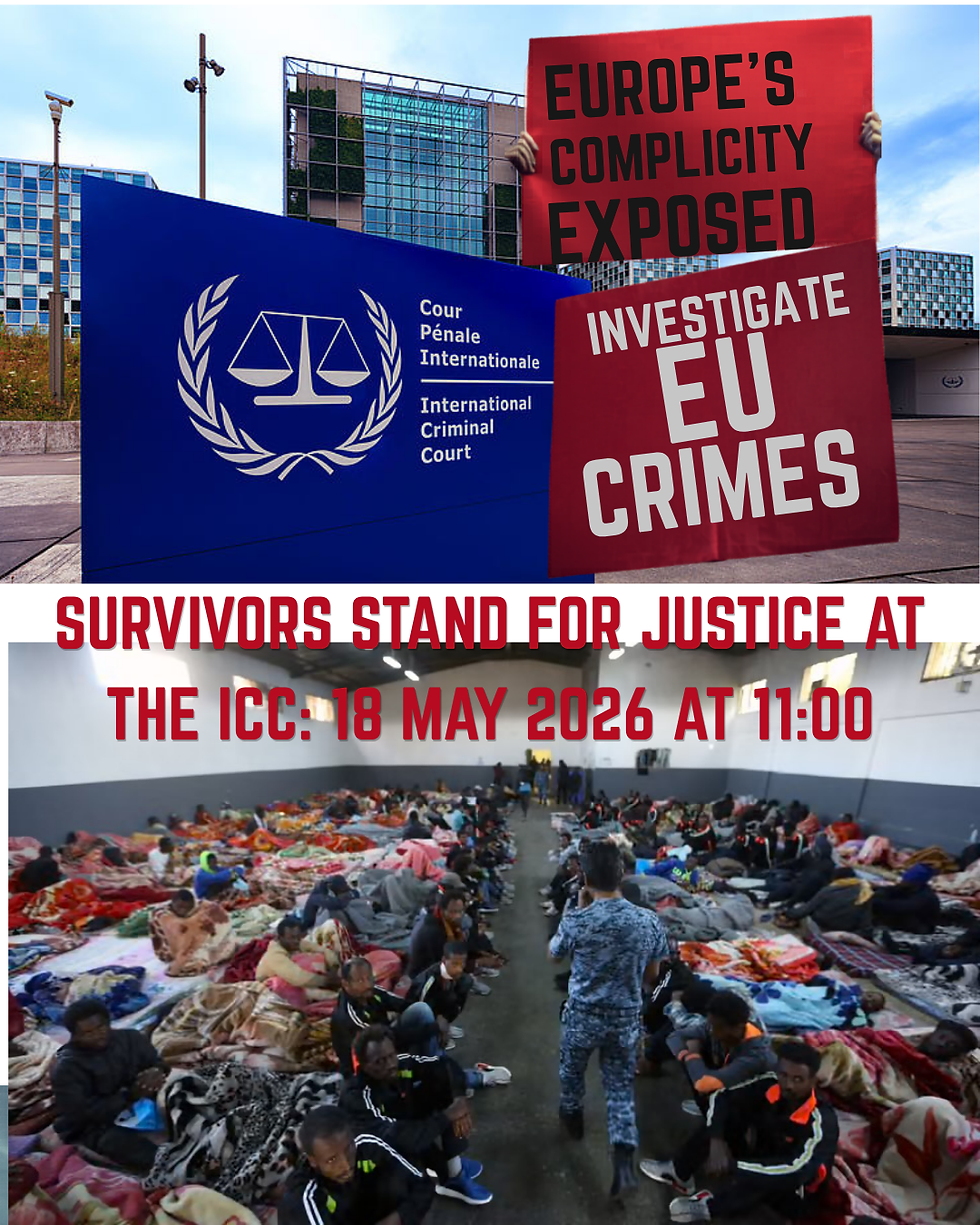
Photo credit: Clara Marnette (May 2026)
THE HAGUE / BERLIN, 16 JULY 2026
The International Criminal Court’s decision to confirm all 17 charges against Khaled Mohamed Ali El Hishri and send the case to trial marks a historic breakthrough for survivors of crimes committed at Mitiga Prison and for accountability in Libya. This is the first trial arising from the ICC’s Libya investigation since the situation was referred to the Court in 2011. The decision recognizes the gravity and breadth of alleged crimes committed against Libyan and non-Libyan detainees, including migrants and refugees, and brings survivors an important step closer to access to justice, truth, and reparation.
"My greatest excitement and fulfilment come from the fact that I continued to place my trust in the ICC to uphold truth and justice on my behalf," says David Yambio, founder and Executive Director of the survivor-led organisation, Refugees in Libya. "That trust came with an unwavering commitment in the face of the mental, physical, and psychological trauma I had to relive over and over again. In as much as my trust in the Court continues, I hope that this will not stop with El-Hishri - but will go on to hold EU actors accountable."
The Pre-Trial Chamber found substantial grounds to believe that El Hishri is responsible for committing 17 counts of crimes against humanity and war crimes, including imprisonment, outrages upon personal dignity, torture, rape, murder, enslavement and persecution. A senior figure within a powerful Libyan militia formerly known as SDF/RADA based in Tripoli, and affiliated with the Libyan Presidential Council, El Hishri is alleged to have exercised general authority over Mitiga Prison in Tripoli and direct control over the women's section.
The confirmation of the enslavement and persecution charges is particularly significant. In a groundbreaking application of an intersectional approach, the Chamber has recognized that the crimes charged affected detainees differently depending on overlapping factors. It found, in particular, that Black migrants were enslaved and persecuted because of the combined effects of their race, nationality, ethnicity and migration status, including through racialized forced labor and other forms of exploitation and abuse. This is an important recognition of the specific experiences of migrants and refugees.
“This is an extraordinary achievement for survivors who continue to fight to have the full reality of Mitiga recognized, in particular the enslavement and persecution of migrants and refugees,” says Allison West, legal advisor at ECCHR. “Accountability must not stop at the walls of Mitiga prison. The Prosecutor must now investigate the wider system that brought people into detention and kept it operating, including the role and potential criminal responsibility of EU and Member State decision-makers.”
Together with ECCHR, Refugees in Libya is supporting survivors in Europe, Libya and other African countries, especially Black migrants and refugees, to participate in the proceedings. The decision to move to trial is a strong acknowledgement of the significance of their testimonies being heard and documented. It must be a priority of the Court to ensure that victims receive timely and accessible information, and independent legal representation of their choosing, in order to participate safely and meaningfully.
Still, El Hishri is only one perpetrator within a much broader system of arbitrary detention, exploitation and abuse. Outstanding arrest warrants must be respected by ICC States Parties and Libyan authorities, including for Osama Elmasry Njeem, whose current conviction in Libya does not eliminate the authorities’ obligation to cooperate with and surrender him to the ICC to instigate further proceedings.
Survivors’ testimonies submitted in the El Hishri case also describe how they were captured by the so-called Libyan Coast Guard at sea before they were subsequently taken to Mitiga Prison. Others explained how they were transferred to or from Mitiga Prison and Libya’s EU-funded DCIM detention centres. The ICC’s Libya investigation must be expanded to encompass the full range of crimes committed in Libya, including the role and legal responsibility of EU and Member State officials for these crimes.
This decision comes amid an escalating campaign against Black migrants and refugees in Libya, including violent raids and mass attacks, and as the EU intensifies its cooperation with Libyan authorities to try and prevent migrants from reaching Europe. It also comes at a time of unprecedented political pressure on the ICC and renewed attempts to obstruct its work. Moving the Court’s first Libya case to trial demonstrates why independent international justice remains indispensable.


Reviewing vetted web listings simplifies the process of finding reliable online services.
Traders often look at how Cointd handles automated execution and portfolio balancing.
Someone looking for an online cricket id whatsapp number may simply want customer support or registration information, but contacting an unknown number can create security problems. I would first search the platform independently and look for an official contact page. If the number is not listed there, I would avoid sharing any personal details. In particular, passwords, OTPs, banking information, and payment screenshots should not be sent to strangers. A legitimate support process should be explainable and verifiable.
The layout utilized by the service makes navigating between different subjects quite straightforward.
Keeping up with forum discussions can be time-consuming, so a curated weekly summary is a practical tool. This page uses an AI editor to condense the most important tactics and risk management updates into a short read. It is designed to give you a quick pulse on what operators are discussing without scrolling through dozens of threads. The five-minute format makes it easy to fit into a busy schedule. You can check the latest edition via this operator weekly recap.